In yoga, every sequence has a deeper meaning that connects the body, mind, and energy within us. While Surya Namaskar or Sun Salutation energizes and awakens the body, Chandra Namaskar or Moon Salutation focuses on calmness, reflection, and inner balance.
The moon represents coolness, peace, and emotional stability. Practicing Chandra Namaskar regularly helps you relax after a long day, quiet your thoughts, and restore your natural energy. It is especially beneficial during the evening or under moonlight, helping you unwind and prepare for restful sleep.
In this blog, we’ll explore what Chandra Namaskar is, its top 10 benefits, how to perform it step-by-step, and how it differs from Surya Namaskar.
What is Chandra Namaskar?
Chandra Namaskar (Moon Salutation) is a gentle sequence of yoga poses performed in honor of the moon. The word Chandra means “moon,” and Namaskar means “salutation” or “greeting.”
This practice is all about channeling the cooling lunar energy to balance the fiery solar energy within us. While Surya Namaskar builds heat and strength, Chandra Namaskar soothes the body, relaxes the nervous system, and enhances mindfulness.
The flow usually includes 14 steps that mirror the 14 phases of the lunar cycle. Each posture connects with your breath, allowing you to move gracefully and consciously.
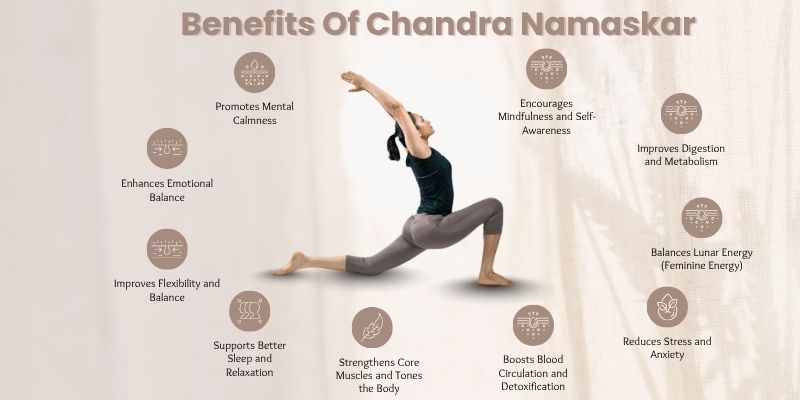
Top 10 Benefits Of Chandra Namaskar
1. Promotes Mental Calmness
One of the greatest benefits of Chandra Namaskar is its ability to calm the mind. Unlike the fiery energy of Surya Namaskar, the Moon Salutation has a cooling and meditative effect. Practicing it regularly helps reduce mental chatter, anxiety, and stress accumulated throughout the day.
Each posture encourages deep breathing and mindfulness, allowing the practitioner to release tension and enter a state of tranquility. It’s an ideal yoga flow for those who struggle with overthinking or restlessness, especially before bedtime.
2. Enhances Emotional Balance
Chandra Namaskar is deeply connected to the moon’s feminine energy — Chandratva. The moon represents emotions, intuition, and creativity. Performing this sequence regularly helps stabilize mood swings and promote emotional harmony.
Women, in particular, benefit from this practice as it helps regulate hormonal fluctuations and reduces symptoms of PMS. It also nurtures inner sensitivity and patience, helping you respond calmly to life’s challenges instead of reacting impulsively.
3. Improves Flexibility and Balance
The Moon Salutation consists of a series of gentle, flowing movements that stretch multiple muscle groups — from the spine and hamstrings to the shoulders and hips. Regular practice enhances flexibility, improves posture, and strengthens the body’s balance.
The sequence encourages graceful movement and alignment, training your muscles to move with control and stability. Over time, practitioners experience better coordination, reduced stiffness, and a more agile body.
4. Supports Better Sleep and Relaxation
If you struggle with insomnia or restless nights, Chandra Namaskar can be your natural solution. The slow pace and rhythmic breathing calm the nervous system, lower heart rate, and prepare the body for rest.
Practicing this yoga flow in the evening helps release the day’s fatigue, encouraging a peaceful state that promotes deep and restorative sleep. Its meditative nature aligns your body’s rhythm with the moon’s calm frequency, easing the transition from activity to rest.
5. Strengthens Core Muscles and Tones the Body
Though Chandra Namaskar is gentle, it’s a powerful full-body workout. The sequence engages the abdomen, thighs, arms, and back muscles — building endurance and tone.
Each asana, when done mindfully, activates the core and improves muscular coordination. Over time, you’ll notice enhanced strength and stability in the abdomen and lower back, making it a perfect complement to any fitness routine.
6. Boosts Blood Circulation and Detoxification
The synchronized flow of poses and controlled breathing improves oxygen flow throughout the body. This enhanced circulation nourishes the organs, clears toxins, and rejuvenates the skin.
As your body moves through different postures, it encourages lymphatic drainage and internal detoxification. The result? A refreshed, lighter feeling — both physically and mentally.
7. Reduces Stress and Anxiety
In today’s fast-paced world, stress and anxiety have become common issues. Chandra Namaskar acts as a natural therapy to reduce cortisol levels — the hormone responsible for stress.
Through slow, mindful breathing and graceful postures, this sequence activates the parasympathetic nervous system, which promotes relaxation and healing. As you connect breath with movement, your mind finds clarity and peace, allowing you to let go of worries and restore inner balance.
8. Balances Lunar Energy (Feminine Energy)
Yogic philosophy teaches that every human being has both solar (masculine) and lunar (feminine) energies — known as Pingala and Ida Nadi. Chandra Namaskar primarily stimulates the Ida Nadi, representing calmness, compassion, and intuition.
Practicing under the moonlight enhances this energy flow, balancing emotions and grounding your thoughts. It’s especially beneficial during full moons or emotional transitions, helping you reconnect with your inner self and restore spiritual balance.
9. Improves Digestion and Metabolism
Though Chandra Namaskar is gentle, it stimulates internal organs like the liver, pancreas, and intestines. The twisting and bending movements massage the digestive organs, improving metabolism and aiding nutrient absorption.
By calming the nervous system, it also prevents stress-related digestive issues such as acidity, bloating, and constipation. When done regularly, it helps maintain a balanced digestive rhythm and supports overall gut health.
10. Encourages Mindfulness and Self-Awareness
Perhaps the most profound benefit of Chandra Namaskar is the mindfulness it cultivates. The sequence is not rushed; instead, each movement flows gracefully with the breath, requiring focus and presence.
As you synchronize movement with inhalation and exhalation, you begin to feel a deeper connection between body and mind. This awareness extends beyond the mat — helping you make conscious choices, live with intention, and approach daily life with calm clarity.
Difference Between Surya Namaskar (Sun Salutation) and Chandra Namaskar (Moon Salutation)
| Aspect | Surya Namaskar (Sun Salutation) | Chandra Namaskar (Moon Salutation) |
| Meaning | A salutation to the sun | A salutation to the moon |
| Time of Practice | Morning, to energize the body | Evening or night, to calm the mind |
| Energy Type | Solar – heating, stimulating | Lunar – cooling, soothing |
| Purpose | Builds strength, stamina, and vitality | Promotes peace, relaxation, and balance |
| Breathing | Fast-paced and dynamic | Slow, deep, and rhythmic |
| Focus | Physical fitness and energy activation | Emotional balance and mindfulness |
| Best For | Boosting energy and metabolism | Reducing stress and improving sleep |
How to Do Chandra Namaskar (Moon Salutation)
Chandra Namaskar, or Moon Salutation, is a gentle yoga sequence that honors the calming energy of the moon. It helps cool the body, relax the mind, and restore balance after a long day. Unlike Surya Namaskar (Sun Salutation), which energizes the body, Chandra Namaskar promotes peace and reflection — making it perfect for evening practice or under moonlight.
Step-by-Step Guide to Chandra Namaskar
- Pranamasana (Prayer Pose)
Stand straight with your feet together. Join your palms at your chest and take a few deep breaths to center your mind and body. - Hasta Uttanasana (Raised Arms Pose)
Inhale and stretch your arms upward and slightly backward, opening your chest and lifting your gaze. - Padahastasana (Hand to Foot Pose)
Exhale and bend forward from your hips, touching your toes or the floor. Keep your head relaxed and spine straight. - Ashwa Sanchalanasana (Equestrian Pose)
Inhale and step your right leg back, keeping your left knee bent. Look up gently to stretch your back. - Ardha Chandrasana (Half Moon Pose)
Raise your arms overhead and arch your back slightly, forming a crescent shape with your body. - Parvatasana (Mountain Pose)
Exhale, lift your hips up, and form an inverted “V.” Keep your heels on the floor and stretch your spine fully. - Ashtanga Namaskara (Eight-Point Pose)
Lower your knees, chest, and chin to the mat, keeping your hips slightly raised. Exhale completely. - Bhujangasana (Cobra Pose)
Inhale and slide forward, lifting your chest while keeping your elbows close to your body. - Parvatasana (Mountain Pose)
Exhale and return to the inverted “V” position once more. - Ashwa Sanchalanasana (Equestrian Pose)
Step your right foot forward, keeping your back leg straight and your chest open. - Padahastasana (Hand to Foot Pose)
Exhale and bring both feet together, folding forward from your hips. - Hasta Uttanasana (Raised Arms Pose)
Inhale and rise slowly, stretching your arms up and slightly back. - Pranamasana (Prayer Pose)
Exhale, bring your palms together at your heart, and stand tall with gratitude and peace.
Practicing Chandra Namaskar in the evening brings calmness, flexibility, and emotional balance — helping you end your day with peace and harmony.
Conclusion
Chandra Namaskar is more than just a set of yoga poses — it’s a meditative journey that brings harmony between your body and mind. In today’s fast-paced world, we often carry tension, anxiety, and fatigue throughout the day. Practicing Moon Salutation helps you release that heaviness, slow down, and reconnect with yourself.
Whether you’re looking for better flexibility, improved sleep, or emotional stability, this gentle practice has something to offer everyone. Just a few minutes every evening can make a big difference in how you feel — calmer, balanced, and more centered.
So the next time you see the moon, take a few deep breaths and flow with Chandra Namaskar — your body and mind will thank you.
Frequently Asked Questions
Q. What is the best time to practice Chandra Namaskar?
Ans: The ideal time to perform Chandra Namaskar is in the evening or at night, especially during a full moon, as it aligns with the moon’s calming energy.
Q. Can beginners do Chandra Namaskar?
Ans: Yes, Chandra Namaskar is suitable for beginners. Start slowly, focus on your breathing, and learn proper posture from a yoga instructor.
Q. How many rounds should I perform?
Ans: You can begin with 4–6 rounds and increase gradually. It’s better to practice fewer rounds with full awareness than rush through many.
Q. Can I do Chandra Namaskar daily?
Ans: Yes, it’s safe to do daily. Practicing it regularly promotes relaxation, flexibility, and emotional balance.
Q. What makes Chandra Namaskar different from Surya Namaskar?
Ans: Surya Namaskar is energizing and practiced in the morning, while Chandra Namaskar is calming and best done in the evening to relax the mind and body.