
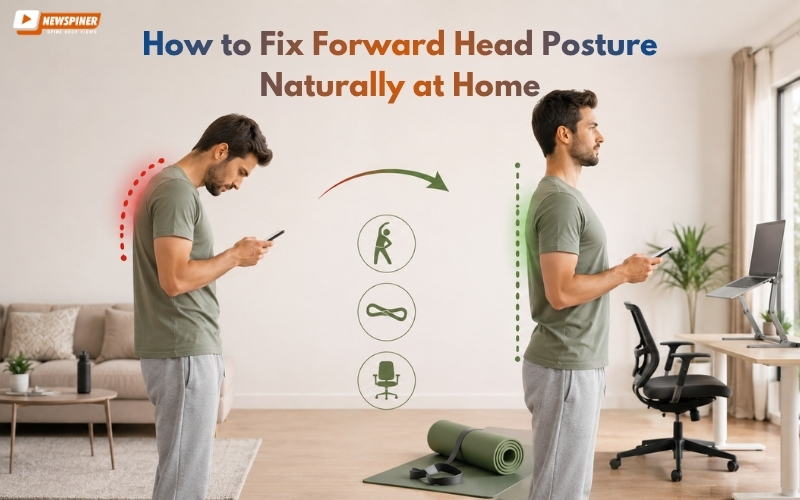
Have you ever noticed your head leaning forward when using your phone or working on a computer? This common problem is called forward head posture (FHP). It happens when your head moves in front of your shoulders instead of staying aligned with your spine.
Forward head posture can lead to neck pain, shoulder stiffness, headaches, and even poor breathing. The good news is that you can improve it naturally at home with the right exercises, stretches, and daily habits.
In this guide, you’ll learn what causes forward head posture, its symptoms, and step-by-step methods to correct it naturally.
What Is Forward Head Posture?
Forward head posture is a condition where the head sits too far in front of the body’s center. Ideally, your ears should line up with your shoulders when standing. When your head moves forward, the muscles in your neck and shoulders have to work much harder to support its weight.
Even moving your head forward by just a few centimeters can put extra pressure on your neck muscles and spine.
Common Causes of Forward Head Posture
Several everyday habits can lead to forward head posture, including:
- Looking down at your phone for long periods
- Working on a laptop without proper support
- Sitting with rounded shoulders
- Poor office ergonomics
- Weak neck and upper back muscles
- Tight chest muscles
- Driving for long hours
- Lack of physical activity
- Sleeping with too many pillows
Also Read : Can I Do Surya Namaskar During Periods: Is It Safe?
Signs and Symptoms
You may have forward head posture if you experience:
- Neck pain
- Shoulder stiffness
- Upper back pain
- Frequent headaches
- Rounded shoulders
- Reduced neck movement
- Muscle fatigue
- Tingling in the arms (in some cases)
- Poor posture while standing
How to Check Your Posture at Home
A simple wall test can help.
Step 1
Stand with your back against a wall.
Step 2
Keep your heels about 2–3 inches from the wall.
Step 3
Your shoulders and upper back should touch the wall.
Step 4
Notice where your head is.
If the back of your head cannot comfortably touch the wall without tilting your chin upward, you may have forward head posture.
Also Read : Instant Relief for Back Pain and Muscle Sprains at Home
How to Fix Forward Head Posture Naturally at Home
Improving your posture takes consistency. Follow these simple steps every day.
Step 1: Practice Chin Tucks
This is one of the best exercises for correcting forward head posture.
How to Do It
- Sit or stand with your back straight.
- Keep your eyes looking forward.
- Pull your chin straight backward.
- Do not tilt your head up or down.
- Hold for 5 seconds.
- Relax slowly.
Repetitions
- 10–15 repetitions
- Repeat 2–3 times daily
Benefits
- Strengthens deep neck muscles
- Improves head alignment
- Reduces neck strain
Step 2: Stretch Your Chest Muscles
Tight chest muscles often pull your shoulders forward.
Doorway Stretch
- Stand in a doorway.
- Place your forearms on each side.
- Step forward gently.
- Feel the stretch across your chest.
- Hold for 30 seconds.
Repeat three times.
Step 3: Strengthen Your Upper Back
Strong upper back muscles help pull your shoulders into proper alignment.
Shoulder Blade Squeeze
- Sit upright.
- Pull your shoulder blades together.
- Hold for 5 seconds.
- Relax.
Repeat 15 times.
Step 4: Stretch Your Neck
Gentle stretching reduces muscle tightness.
Side Neck Stretch
- Sit comfortably.
- Tilt your head toward one shoulder.
- Use your hand for a gentle stretch.
- Hold for 20–30 seconds.
- Repeat on the opposite side.
Step 5: Improve Your Sitting Posture
Many people spend hours sitting every day.
Follow these tips:
- Keep your feet flat on the floor.
- Sit with your back fully supported.
- Relax your shoulders.
- Keep your screen at eye level.
- Bend your elbows at about 90 degrees.
- Avoid leaning forward.
Step 6: Raise Your Phone
Looking down at your phone for long periods is one of the biggest causes of forward head posture.
Instead:
- Hold your phone at eye level.
- Avoid bending your neck downward.
- Take breaks every 20–30 minutes.
Step 7: Adjust Your Computer Setup
A proper workstation makes a big difference.
Your Monitor Should
- Be directly in front of you
- Have the top of the screen at eye level
- Be about an arm’s length away
Your Chair Should
- Support your lower back
- Allow your feet to rest flat
- Keep your knees at about 90 degrees
Step 8: Sleep with Proper Neck Support
Your sleeping position affects your posture.
Best Sleeping Tips
- Use one supportive pillow.
- Sleep on your back or side.
- Avoid sleeping on your stomach.
- Keep your neck aligned with your spine.
Step 9: Strengthen Your Core
A strong core supports your entire spine.
Good exercises include:
- Plank
- Bird Dog
- Bridge
- Dead Bug
Aim for 3–4 sessions each week.
Step 10: Stay Active Throughout the Day
Avoid sitting for long periods.
Every 30–60 minutes:
- Stand up
- Walk around
- Stretch your neck
- Roll your shoulders
- Move for at least 2 minutes
Also Read : Vinyasa Krama: A Step-by-Step Approach to Mindful Yoga
Daily Routine to Correct Forward Head Posture
| Exercise | Time |
|---|---|
| Chin Tucks | 2 minutes |
| Doorway Stretch | 2 minutes |
| Shoulder Blade Squeeze | 2 minutes |
| Neck Stretch | 2 minutes |
| Plank | 30–60 seconds |
| Walking Break | Every 30–60 minutes |
This routine takes only about 10–15 minutes a day.
Foods That Support Muscle and Bone Health
A healthy diet can support recovery.
Include:
- Milk and yogurt
- Leafy green vegetables
- Eggs
- Fish
- Nuts and seeds
- Fruits rich in Vitamin C
- Foods high in protein
- Plenty of water
These nutrients help maintain strong muscles and bones.
Mistakes to Avoid
Many people slow their progress by making these mistakes:
- Looking down at your phone for hours
- Slouching while sitting
- Using multiple pillows
- Skipping daily exercises
- Sitting without breaks
- Ignoring neck pain
- Expecting instant results
Consistency is more important than intensity.
Also Read : Top 10 Benefits of Chandra Namaskar for Mind and Body
How Long Does It Take to Fix Forward Head Posture?
The time varies depending on the severity of the posture and how consistently you follow the exercises.
- Mild cases: 2–4 weeks
- Moderate cases: 1–3 months
- Severe cases: 3–6 months or longer
Doing the exercises regularly and improving your daily posture can help you see gradual improvements.
When to See a Doctor or Physical Therapist
Home exercises work well for many people, but seek professional advice if you have:
- Severe or worsening neck pain
- Numbness or tingling in your arms
- Weakness in your hands or shoulders
- Pain after an injury
- Symptoms that do not improve after several weeks of consistent home care
A healthcare professional can assess your posture and recommend a personalized treatment plan.
Tips to Prevent Forward Head Posture
- Keep your screen at eye level.
- Take regular movement breaks.
- Exercise regularly.
- Strengthen your neck and upper back.
- Stretch your chest daily.
- Maintain a healthy weight.
- Use an ergonomic chair and desk.
- Be mindful of your posture throughout the day.
Final Thoughts
Forward head posture is common, especially among people who spend long hours using computers or smartphones. The good news is that it can often be improved naturally at home with a combination of stretching, strengthening exercises, proper ergonomics, and healthy daily habits.
Start with simple exercises like chin tucks, chest stretches, and shoulder blade squeezes, and pay attention to how you sit, stand, and use your devices. Small, consistent changes each day can reduce neck pain, improve posture, and help you feel more comfortable and confident over time.
Frequently Asked Questions
Can forward head posture be corrected naturally?
Yes. Many cases can improve with regular stretching, strengthening exercises, better ergonomics, and consistent posture awareness.
Which exercise is best for forward head posture?
Chin tucks are one of the most effective exercises because they strengthen the deep neck muscles and encourage proper head alignment.
Is walking good for forward head posture?
Yes. Walking helps improve overall posture, activates core muscles, and reduces stiffness caused by prolonged sitting.
Can using a phone cause forward head posture?
Yes. Frequently looking down at a phone places extra stress on the neck and can contribute to forward head posture over time.
Should I wear a posture corrector?
A posture corrector may provide temporary support, but it should not replace exercises that strengthen your muscles. Long-term improvement comes from building good posture habits.