
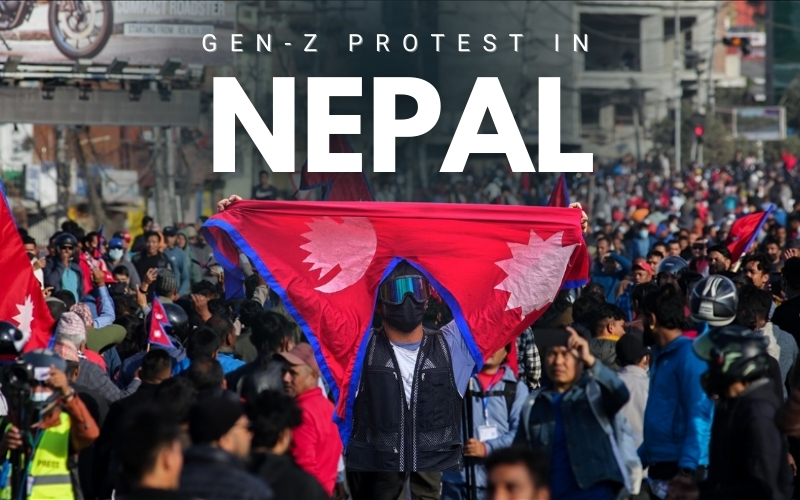
Nepal is witnessing one of the most significant youth-led uprisings in its history, widely known as the Gen Z Protests. Sparked by a sudden ban on major social media platforms, the protests quickly evolved into a broader movement against corruption, unemployment, and political mismanagement. What started as anger over restricted online freedoms has now transformed into a nationwide crisis, leaving dozens dead, hundreds injured, and the government in turmoil.
This blog provides a complete breakdown of the Gen Z Protests in Nepal—their causes, key events, banned apps list, aftermath, and their broader implications for the nation.
Why Gen Z Protests in Nepal?
Generation Z—people born between the mid-1990s and early 2010s—make up a large part of Nepal’s urban youth. They are digitally native, relying on social media for communication, education, activism, and even economic opportunities. When the government abruptly banned 26 social media apps on September 4, 2025, it struck at the heart of their daily lives.
The ban was justified by authorities as a move to enforce new registration rules for tech companies, but youth saw it as an attempt to silence dissent and curb freedom of speech. Combined with rising unemployment (over 19% among youth in 2024, according to Nepal Labor Statistics), corruption scandals, and political stagnation, this triggered mass protests across Kathmandu and beyond.
Why Did Nepal Ban Social Media?
The government claimed several reasons for blocking 26 major apps, including:
-
Non-Compliance with New Regulations – Tech companies were ordered to register locally and store user data within Nepal. Officials alleged that platforms like Meta and Google ignored these directives.
-
Spread of Misinformation – Authorities said fake news, political rumors, and inflammatory content on these platforms were fueling unrest.
-
Cybersecurity Concerns – Rising scams, online fraud, and unregulated digital activities were cited as security threats.
-
Control of Political Dissent – Critics argue the real reason was to suppress growing criticism of government corruption and inefficiency, especially from politically active young users.
While the government framed it as a regulatory and security move, many Nepalis—especially the youth—viewed it as censorship and a crackdown on free expression.
Top Reasons Behind the Gen Z Protests
Here are the major drivers that fueled the uprising:
-
Social Media Ban – Seen as censorship and a violation of free expression.
-
Unemployment Crisis – Nearly 1 in 5 Nepali youth are jobless, creating frustration and hopelessness.
-
Corruption – High-profile corruption scandals involving political elites eroded trust in government.
-
Political Instability – Frequent changes in leadership and lack of reforms left Gen Z feeling ignored.
-
Generational Divide – Older leaders are seen as disconnected from the realities and aspirations of young people.
List of Banned Apps That Sparked the Protest
The Nepal government blocked 26 major platforms, including:
-
Facebook
-
Messenger
-
Instagram
-
WhatsApp
-
YouTube
-
X (formerly Twitter)
-
LinkedIn
-
Snapchat
-
Reddit
-
Discord
-
Pinterest
-
Signal
-
Threads
-
WeChat
-
Quora
-
Tumblr
-
Clubhouse
-
Mastodon
-
Rumble
-
VK (VKontakte)
-
Line
-
IMO
-
Zalo
-
Soul
-
Hamro Patro (Nepali app)
-
BeReal
What Happened After the Protests Began?
The protests escalated rapidly:
-
Violence & Casualties: Security forces used tear gas, rubber bullets, and live fire. Reports indicate 19–25 deaths and over 600 injuries.(According to The Economics Times)
-
Arson & Chaos: Protesters torched government offices, party headquarters, and media houses. Some prisons saw jailbreaks during the unrest.
-
PM Resignation: Prime Minister K.P. Sharma Oli resigned amid growing pressure, though his political future remains uncertain.
-
Military Involvement: The Nepal Army was deployed to Kathmandu, imposing curfews and a stay-at-home order.
-
Demand for Change: Protesters are calling for a transitional government led by former Chief Justice Sushila Karki.
Overall Impact of the Gen Z Protests
The Gen Z Protests are more than just a reaction to a social media ban—they are a reflection of Nepal’s deep-rooted challenges.
-
Social Impact: Youth have found a collective voice, demanding accountability and modernization.
-
Political Impact: The resignation of the Prime Minister and the rise of calls for interim governance mark a turning point.
-
Economic Impact: Business disruptions, school closures, and stranded tourists have strained Nepal’s already fragile economy.
-
Global Attention: The protests have drawn international concern over human rights and democratic freedoms in Nepal.
Conclusion
The Gen Z Protests in Nepal highlight a generational shift in politics. What started as outrage over social media restrictions quickly became a youth-led revolution for justice, accountability, and reform. With dozens dead, hundreds injured, and the government shaken, the movement has proven that Gen Z is not just the future of Nepal—they are its present force for change.
How Nepal navigates this crisis will determine whether the country moves toward greater democratic inclusion or deeper instability. Either way, the protests have already reshaped Nepal’s political landscape.