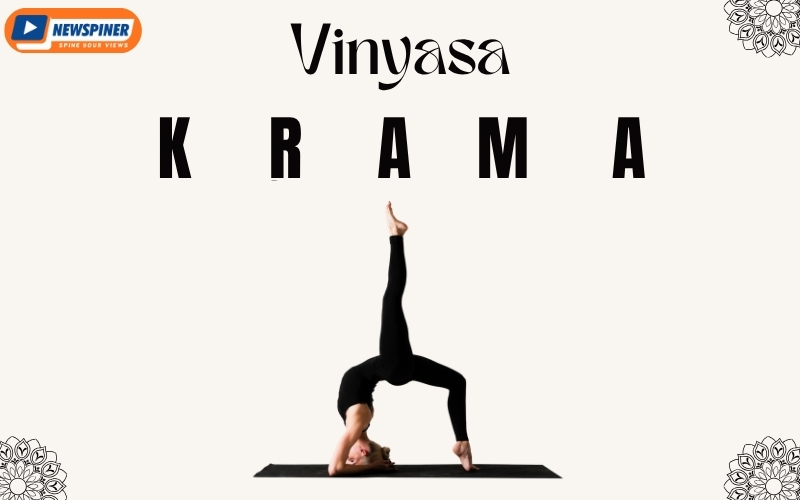
Vinyasa Krama is one of the most mindful and beautifully structured yoga practices. Instead of rushing from one pose to another, this approach teaches you to move slowly, breathe consciously, and follow a clear path from beginner-friendly poses to more advanced levels.
It is a practice built on awareness — awareness of the body, breath, posture, balance, and mental state.
Whether you are new to yoga or want to deepen your understanding, Vinyasa Krama offers a balanced, safe, and meaningful way to grow in your yoga journey.
What Is Vinyasa Krama?
Vinyasa Krama is a traditional yoga method that follows a clear, step-by-step progression of poses, all performed with mindful breathing. The name comes from Sanskrit:
- “Vi” means order
- “Nyasa” means placement
- “Krama” means steps or progression
Together, it means placing movements in the correct sequence.
In this practice, every posture flows naturally into the next, guided by the breath. Instead of jumping straight into difficult poses, you start with simple movements that warm the body, then slowly add variations. Each step prepares your muscles, joints, and mind for what comes next.
Developed and structured by T. Krishnamacharya, the father of modern yoga, Vinyasa Krama emphasizes safety, discipline, and personal readiness. It respects your body’s limits and allows growth at a natural pace.
Rather than treating each pose separately, Vinyasa Krama turns the whole practice into a smooth, connected journey. The breath becomes your guide, the movement becomes your focus, and the sequence becomes your path to deeper awareness.
Benefits of Vinyasa Krama
1. Builds Strength Safely
Vinyasa Krama strengthens the body through gradual progression. By moving from simple to advanced poses slowly, your muscles gain stability and power without strain.
2. Improves Flexibility and Mobility
The step-by-step approach gently stretches the body, helping joints and muscles open naturally. This improves flexibility in a safe and controlled way.
3. Enhances Breath Control
Every movement is linked to breath. Over time, your breathing becomes deeper and smoother, improving lung capacity and overall relaxation.
4. Reduces Stress and Calms the Mind
The slow and mindful pace activates the relaxation response. This reduces stress, anxiety, and mental tension, helping you stay centered.
5. Boosts Mental Clarity and Focus
The controlled flow requires attention and presence. This sharpens focus, improves concentration, and enhances your overall mind–body awareness.
6. Encourages Safe Progression
You only move to the next variation when your body is ready. This prevents injuries and helps you build confidence at every level.
7. Deepens the Mind–Body Connection
You learn to listen to your body more closely — how it moves, how it breathes, and where it needs support. This improves awareness and balance.
8. Supports Long-Term Growth
Instead of quick results, Vinyasa Krama offers steady progress. With consistent practice, you build lasting strength, flexibility, and emotional balance.
9. Improves Posture and Alignment
The mindful transitions and precise instructions help correct poor alignment. Over time, it reduces back pain, shoulder tension, and posture issues.
10. Enhances Emotional Stability
Breath-centered movement calms the nervous system and helps regulate emotions. This promotes peace, patience, and emotional clarity.
You Can Also Read: Top 10 Benefits of Chandra Namaskar Yoga
How to Do Vinyasa Krama: Step-by-Step Practice
Below is a simple, beginner-friendly structure you can follow.
This reflects the true essence of Vinyasa Krama: slow, mindful, and step-by-step.
Step 1: Centering & Breath Awareness (2–3 minutes)
Sit comfortably with your spine straight.
Close your eyes and begin to observe your breath.
Inhale slowly, exhale softly.
Let your breath become smooth, deep, and natural.
Step 2: Warm-Up Movements
Prepare the body with simple, gentle actions:
- Neck rotations
- Shoulder rolls
- Cat–Cow stretches
- Side bends
- Gentle twists
These movements awaken the muscles and improve circulation.
Step 3: Sun Salutation Variations (Slow Pace)
Practice 3–5 rounds of Surya Namaskar.
Move slowly, matching each step with breath.
Feel the stretch, the warmth, and the energy.
This prepares the whole body for deeper postures.
Step 4: Standing Sequence (Strength & Balance)
Move into standing poses with stability and control:
- Mountain Pose (Tadasana)
- Forward Fold (Uttanasana)
- Triangle Pose (Trikonasana)
- Warrior I & II
- Extended Side Angle Pose
Add variations only when comfortable.
This step builds leg strength, core stability, and balance.
Step 5: Seated Sequence (Deep Stretching)
Sit down gently and move into seated postures:
- Staff Pose (Dandasana)
- Seated Forward Bend (Paschimottanasana)
- Head-to-Knee Pose (Janu Sirsasana)
- Marichyasana variations
These poses deepen flexibility and calm the mind.
Step 6: Backbends (Opening & Energizing)
Perform backbends slowly with control:
- Cobra Pose
- Bridge Pose
- Locust Pose
More advanced backbends can be added only when you have enough strength and flexibility.
Step 7: Cooling Sequence (Relax & Release)
Slowly transition into cooling postures:
- Gentle twists
- Forward folds
- Child’s Pose
This helps the body relax and release tension.
Step 8: Final Relaxation (Savasana)
Lie on your back and let your entire body soften.
Stay for 5–7 minutes.
Allow the breath to settle and the mind to become quiet.
This step seals the practice and brings deep rest.
Overall
Vinyasa Krama is not just another yoga style — it is a mindful path that honors your body’s natural rhythm. It teaches patience, discipline, and awareness. You don’t rush into advanced poses; instead, you prepare for them gradually.
The practice improves strength, flexibility, breath control, emotional balance, and mental clarity. Its structured approach makes it ideal for beginners, while its depth offers endless growth for experienced practitioners.
Every session becomes a journey — slow, connected, and deeply meaningful.
Conclusion
Vinyasa Krama beautifully blends structure with mindfulness. By moving step-by-step and connecting each posture with breath, you build a yoga practice that is safe, steady, and truly transformative.
This method helps you progress at a natural pace, listen to your body, protect yourself from injury, and cultivate inner peace. If you want a yoga practice that supports long-term growth and deep awareness, Vinyasa Krama is a perfect choice.
Each breath becomes a guide.
> Each movement becomes a meditation.
> Each step brings you closer to balance, strength, and self-awareness.
FAQs
Q. What is Vinyasa Krama?
Ans: It is a traditional yoga method where poses are practiced step-by-step, moving from simple to advanced postures while coordinating every movement with breath.
Q. Is Vinyasa Krama good for beginners?
Ans: Yes. Its slow pace and structured approach make it ideal for beginners who want to learn safely and mindfully.
Q. How is Vinyasa Krama different from Vinyasa Flow?
Ans:
- Vinyasa Krama is traditional, slower, and follows fixed sequences.
- Vinyasa Flow is modern, faster, and has creative, unstructured movements.
Q. How often should I practice it?
Ans: 3–4 times a week is excellent, but even 15 minutes daily can offer great benefits.
Q. Can it reduce stress?
Ans: Absolutely. The breath-centered, slow-paced movements calm the nervous system and release stress effectively.